Dialog on Soul and Fate
Stanislaw Vincenz (1888—1971)
GRENOBLE – LA COMBE (FRANCE)
ABOUT EXHIBITION

Even before coming to France, Vincenz started to cooperate with Jerzy Giedroyc’s “Kultura”. There, he published selected chapters of Na Wysokiej Połoninie (In High Polonyna) and essays, including Czym może być dla nas Dante? (What Can Dante Be for Us?) and Rocznice Gandhiego (Gandhi’s Anniversaries). He was friends and corresponded with people from the circle of “Kultura” (mainly Giedroyc, Józef and Maria Czapski and Jerzy Stempowski), promoted the magazine among friends, co-created its profile, and gave opinions on initiatives. He considered himself an active and responsible member of the “broader”, “invisible editorial office”. In 1965, the Literary Institute in Paris published a collection of Vincenz’s essays Po stronie pamięci (On the Side of Memory) with a preface by Czesław Miłosz.
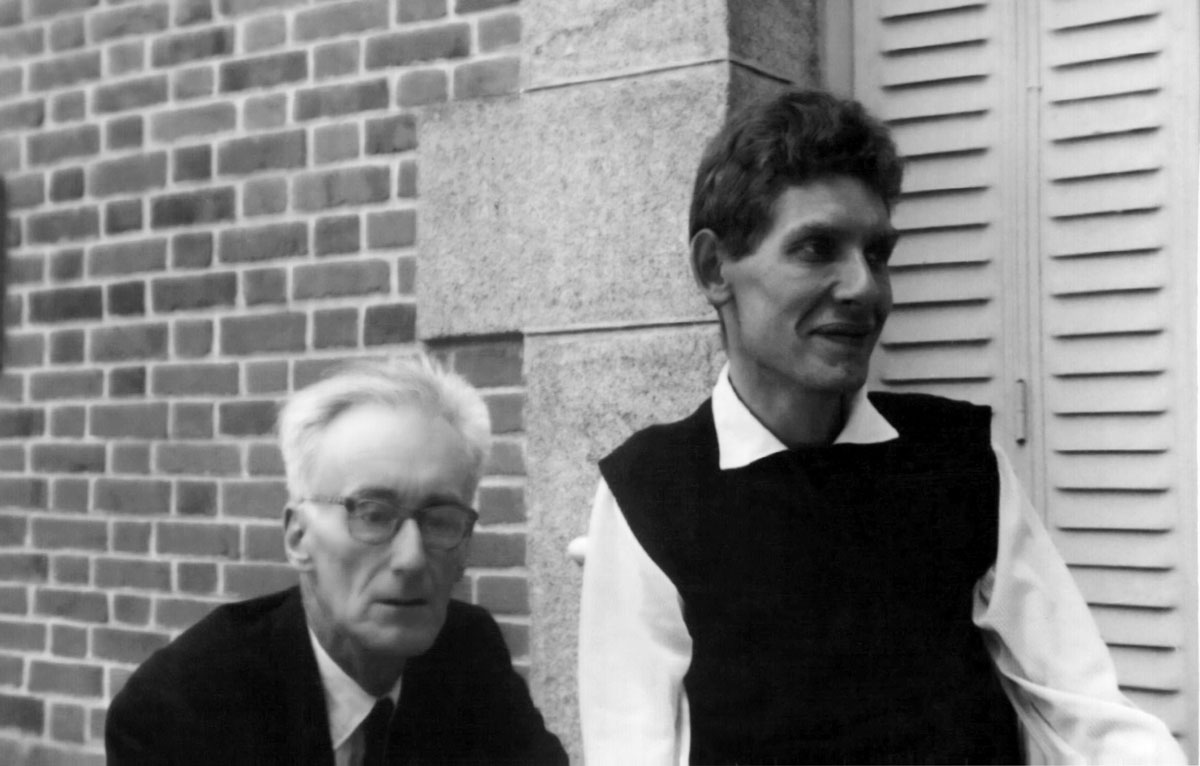
Józef Czapski and Jean Colin, Roussillon, 1958
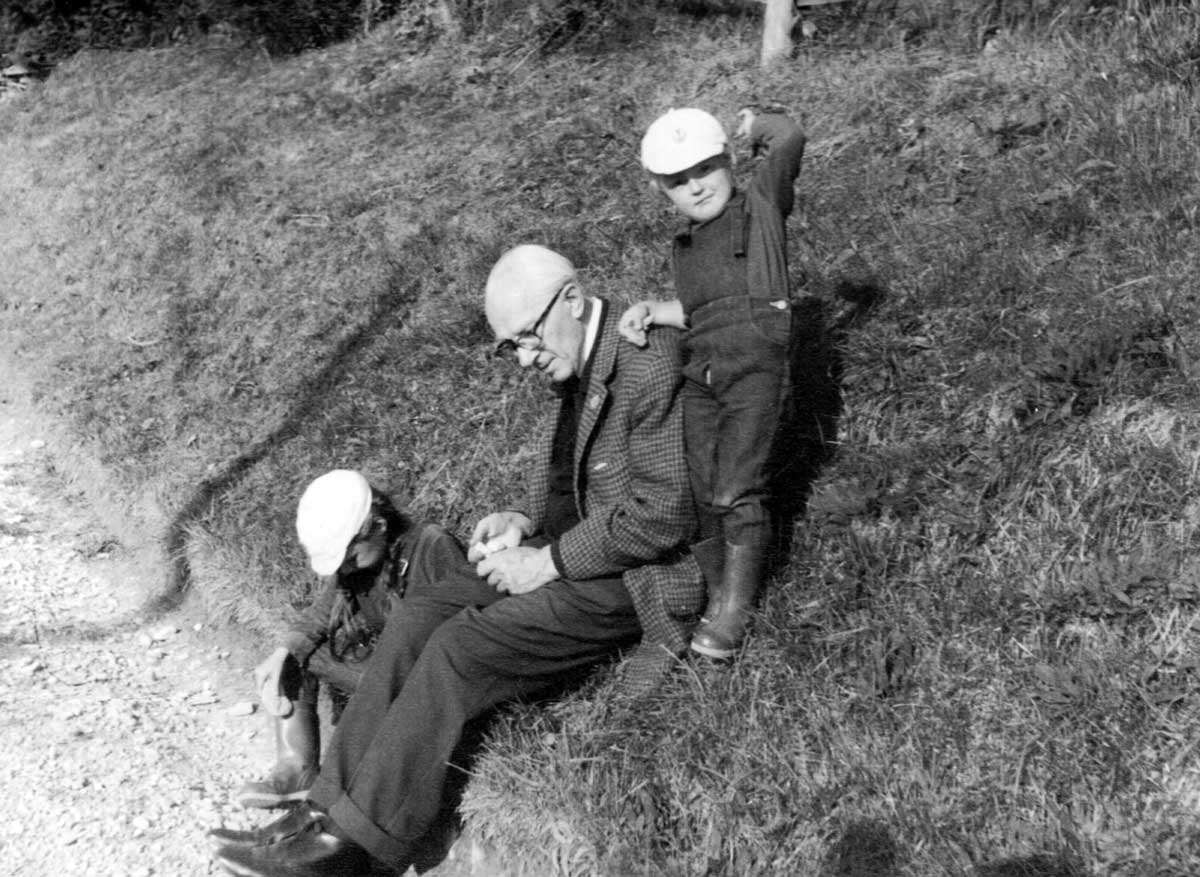
Jerzy Stempowski with the grandchildren of Stanisław Vincenz, Adelboden, 1967
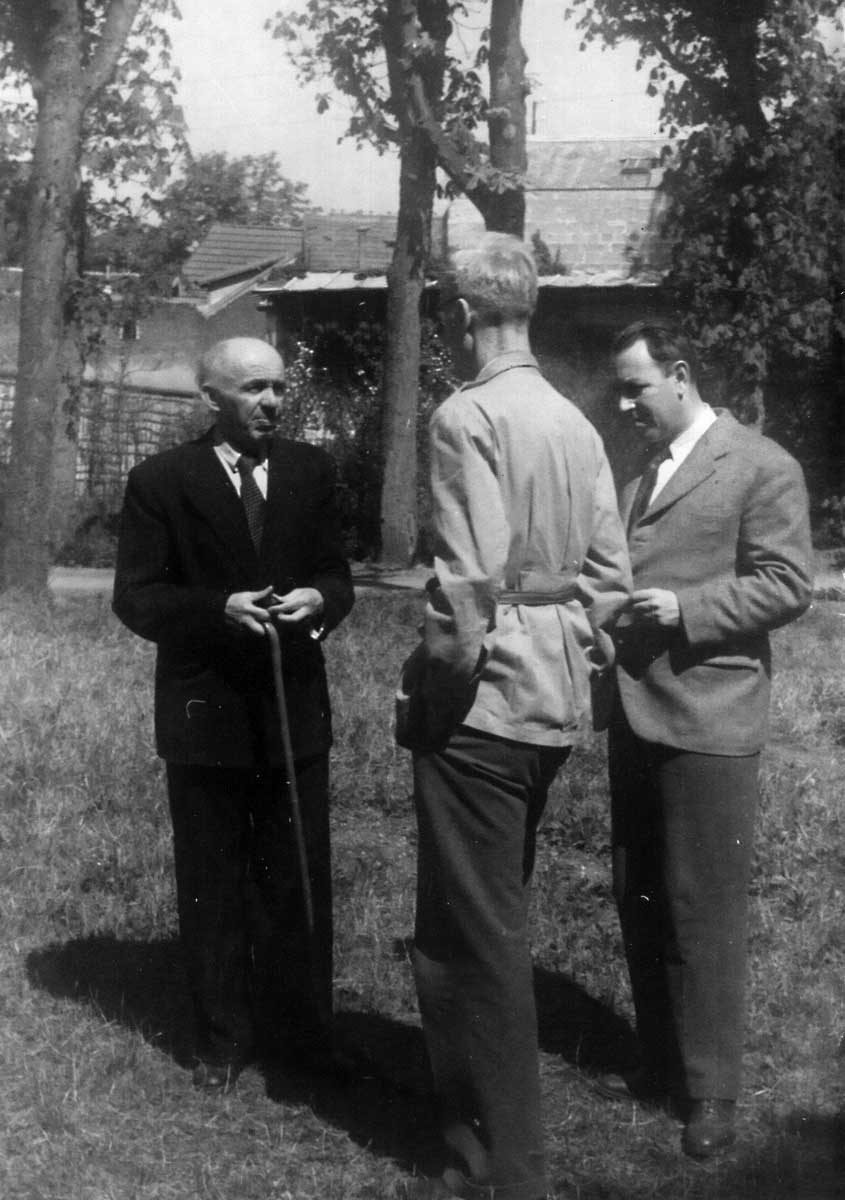
Stanisław Vincenz in “Kultura”, Paris, 1950
September 17, 1939. Memorable radio. Syrojids (mythical subhuman creatures) are approaching, departure from Słoboda in the evening, arrival at Żabi. Overnight stay interrupted.
(Stanisław Vincenz, Outopos, 1939)
Among the Ukrainian intelligentsia in Lwów, many people stick to the Soviets: these are Ukrainian nationalists who think that there will be Ukraine someday, so it’s good to sweep Poles out of there completely, and they act like that. Of course, syrojids are not so stupid not to see it, so they have also recently taken the Ukrainians in hand and a lot of people have been expelled, arrested, etc.
(Lena Vincenz, a letter to Jerzy Stempowski, October 1940)
Crowds of yellow-rotten leaf-men (Listoludy) caught up with me like a storm. One-eyed dwarfs (Karłotwory), one like the other, identical – Syrojids. They knocked me down to the hot ground, there, next to the thundering splashes of hell. They choked me with smelly, rough bodies. They quickly put heavy logs on my feet.
(Stanisław Vincenz, Syrojidy, 1952)
Syrojids – the greatest thing in this issue. I’m just dazzled. Hutsul Dante. I can’t understand how much there is from the original and how much Vincenz has styled it. This story is like a very good wine. You can feel its taste for a long time.
(Melchior Wańkowicz, a letter to Jerzy Giedroyc, 1952)
Thoreau was convinced that man is like a tree and that his roots cannot hang in the air. That is exactly the content of the Hutsul fairy tale about the country of the Syrojids, man-eaters that look like dead leaves and always move in a flock at the mercy of the wind.
(Czesław Miłosz, La Combe, 1958)