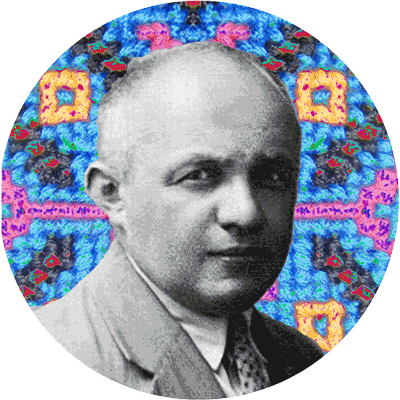
Dialog on Soul and Fate
Stanislaw Vincenz (1888—1971)
GRENOBLE – LA COMBE (FRANCE)
ABOUT EXHIBITION

“Sunday, during lunch, Stanisław tells about how there was no place for him in Poland, that Ksawery Pruszyński confirmed it by saying: “They will kill you one day; If you provoke Jews and Ukrainians, one fine day they will pick you up in a car, take you to the forest and shoot you dead for not considering their nationalist dogma as sacred “.
(Irena Vincenz, Rozmowy ze Stanisławem Vincenzem [The Talks with Stanisław Vincenz], 1960)
“This is your gesture, all this Polonyna. To devote so much time and heart. And to want nothing for it. I am moving away from Poles, I do not come closer to Ukrainians”.
(Irena Vincenz, Rozmowy ze Stanisławem Vincenzem [The Talks with Stanisław Vincenz], 1956)
“Although I had been a declared Ukrainophile for years, I was not delighted with the “fait accompli”, which was the seizure of Lwów by Ukrainian troops selected from Austrian regiments, and from the very beginning I considered this conflict a civil war.”
(Stanisław Vincenz, Garść wspomnień o Baziu [Some Memories of Bazio], 1962)
“Mr. Vincenz calls himself a “resolute Ukrainophile”. And he has an undeniable right to that title. Whoever knows the Hutsul region so much, whoever loves it so much and misses it (even in Naples hears whispers from the Hutsul region …), whoever recreated and immortalized it with such mastery is certainly a friend of the Ukrainian nation. For his services to this charming corner of Ukrainian land, the Ukrainians repay him with feelings of respect and gratitude. Such mutual friendship obliges: one must know and respect the aspirations of the Ukrainian people and regard them as an equal partner.
After all, we call a civil war an armed conflict between citizens of one and the same country. What kind of citizens were the inhabitants of eastern Galicia in the autumn of 1918, when Austria broke up? No, Dear Mr. Vincenz. For Ukrainians, the Polish-Ukrainian war of 1918/1919 was not a civil war but a liberation war. And under this name, it went down in Ukrainian history.
It was impossible to delay any longer. The so-called Liquidation Commission was to leave Kraków for Lwów the next day and seize power from the governor of Galicia on behalf of the Republic of Poland. – In light of these facts, what does the allegation of “fait accompli” look like? Poles, who deluded themselves with the idea of a good-natured Ruthenian people satisfied with its fate and of a handful of rebellious Ukrainian leaders, could be surprised by the events of November 1918. But those who read Ukrainian newspapers, who knew Ukrainian national life and understood its development trends, they could not have doubts what the Ukrainians would do when Austria fell apart.
At that time, I was a student at the University of Lwów and I remember the enthusiasm of not only academic youth in November 1918, not only the intelligentsia, but the widest strata of the nation. Why is Mr. Vincenz angry with the Galician Ukrainians (even today, from the perspective of 45 years!) for wanting to be free?”
(Milena Rudnyćka, a letter to “Kultura”, 1963)
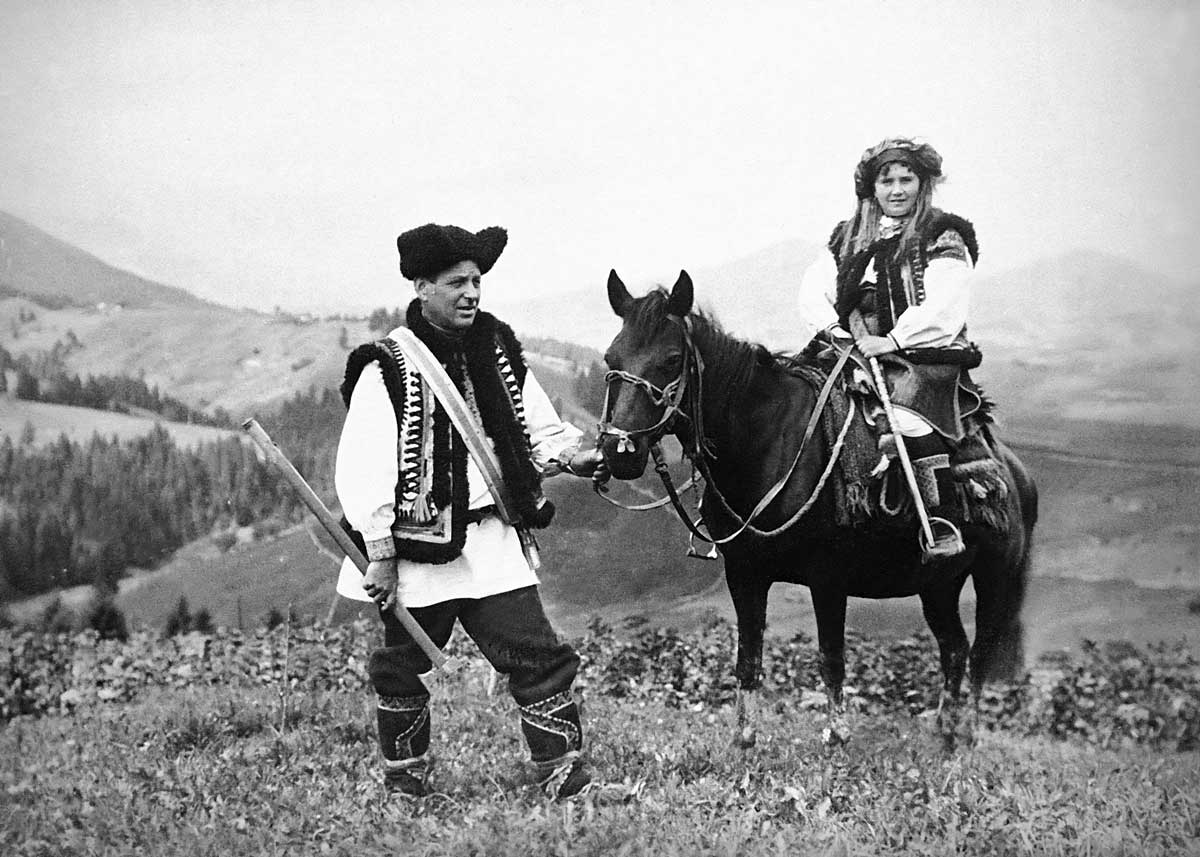
Hutsuls, 1933, photo by L. Cipriani
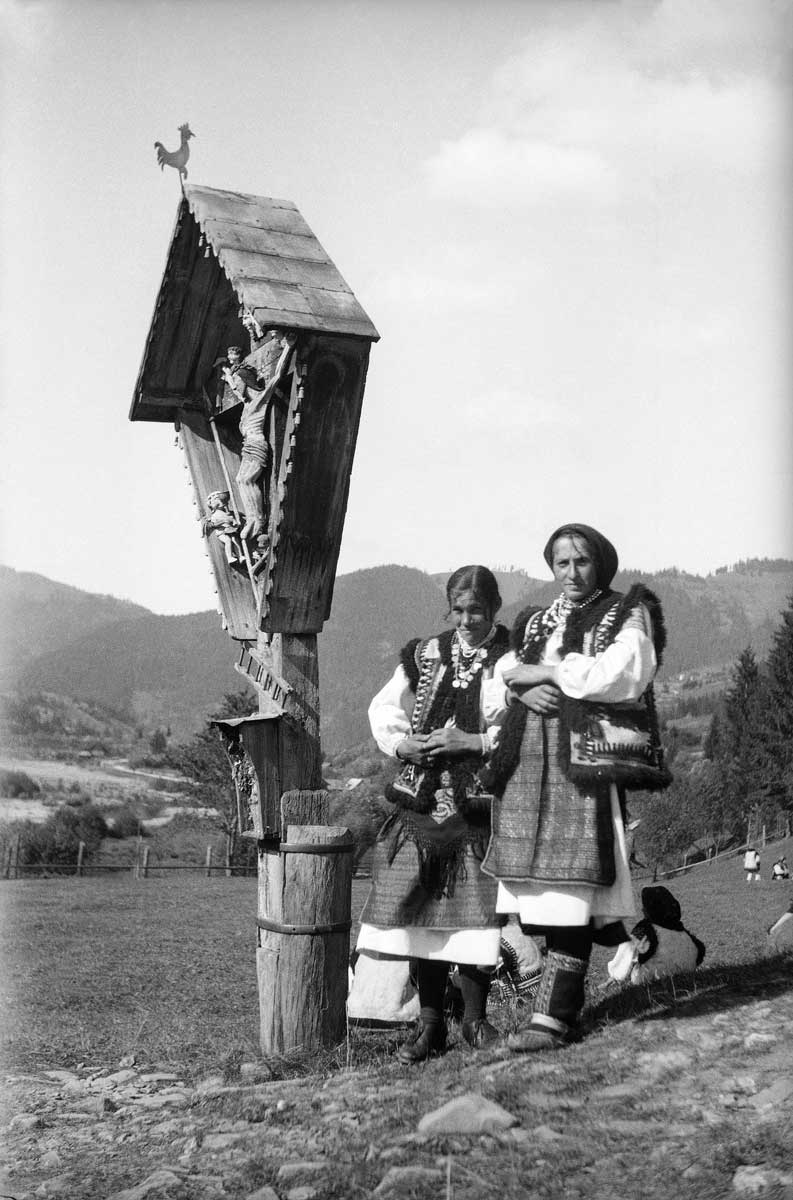
Hutsuls, 1933, photo by L. Cipriani
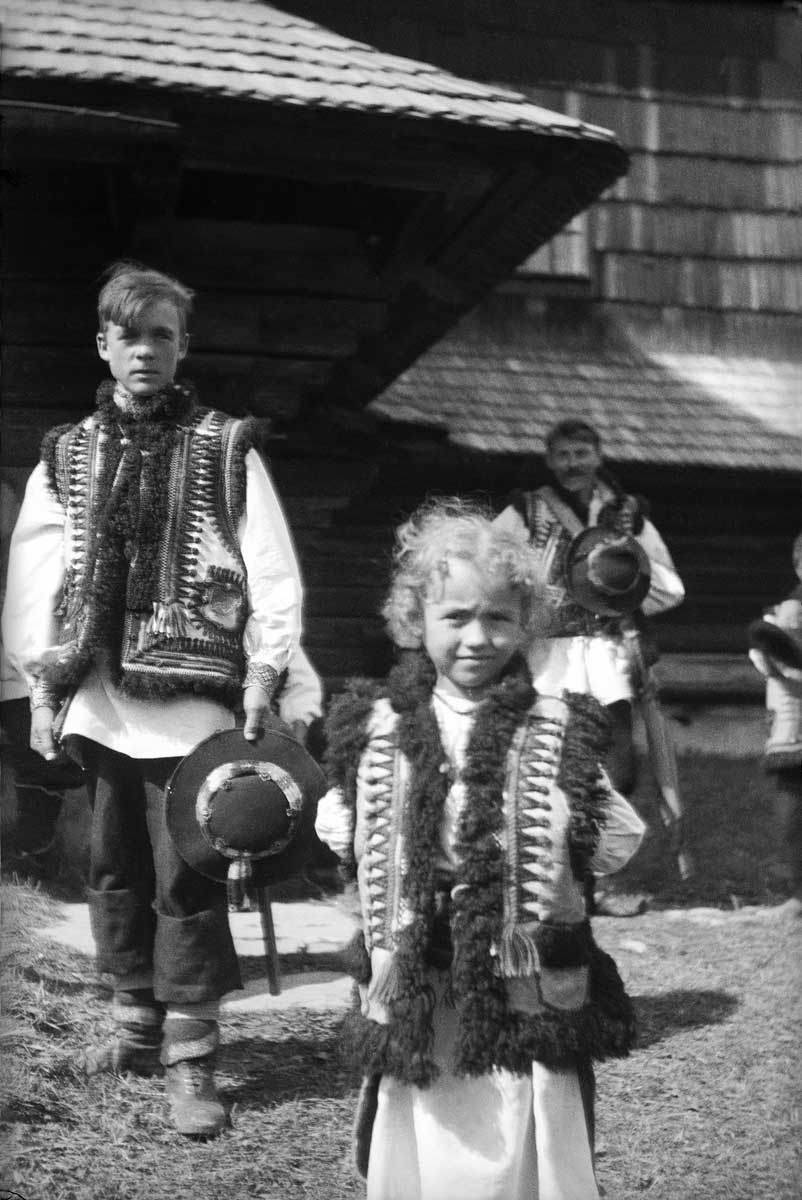
Hutsuls, 1933, photo by L. Cipriani
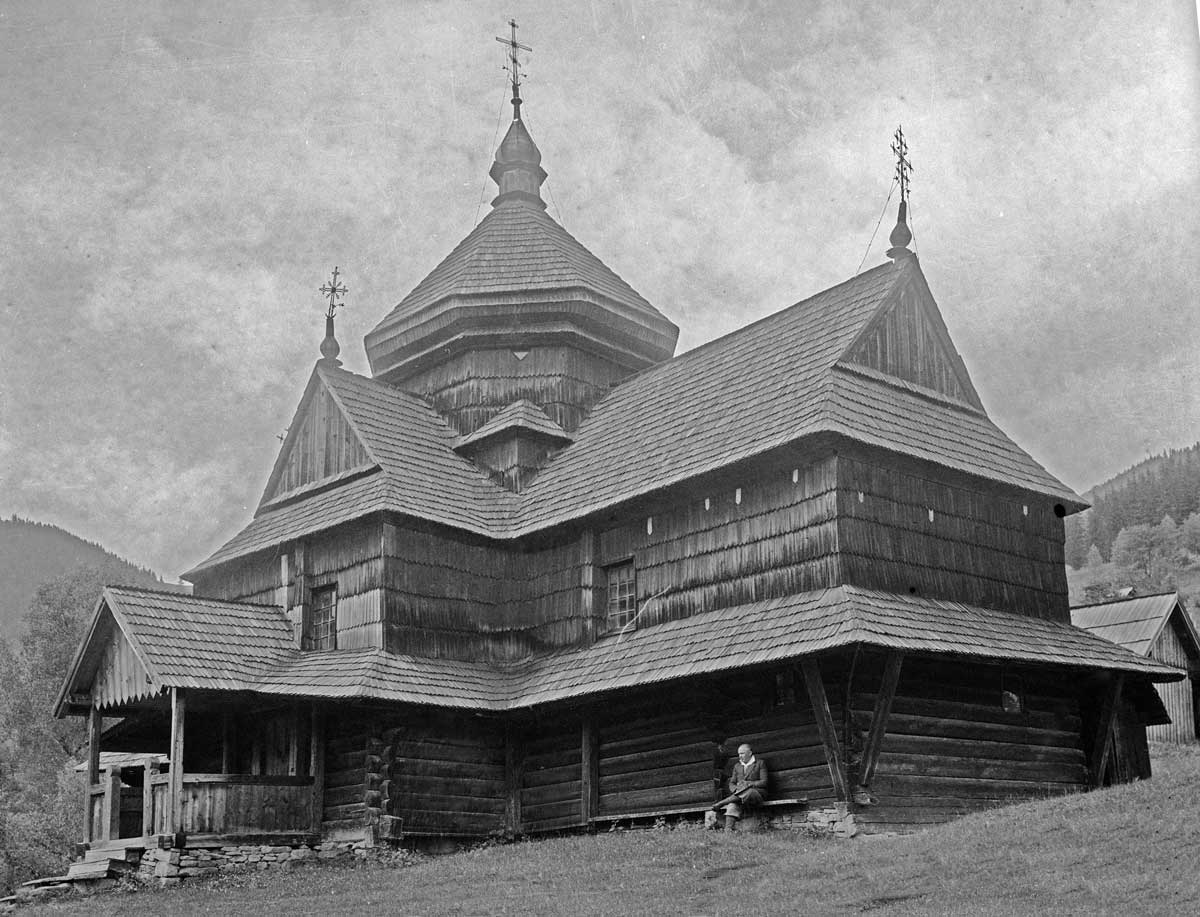
Stanisław Vincenz by the church in Krzyworównia, 1933, photo by L. Cipriani
“The difference between me and Szeptycki. He wanted to be the father of Ukrainians,
I wanted the unity between Poland and Ukraine”.
(Irena Vincenz, Rozmowy ze Stanisławem Vincenzem [The Talks with Stanisław Vincenz], 1957)