Dialog on Soul and Fate
Stanislaw Vincenz (1888—1971)
BYSTRZEC
ABOUT EXHIBITION

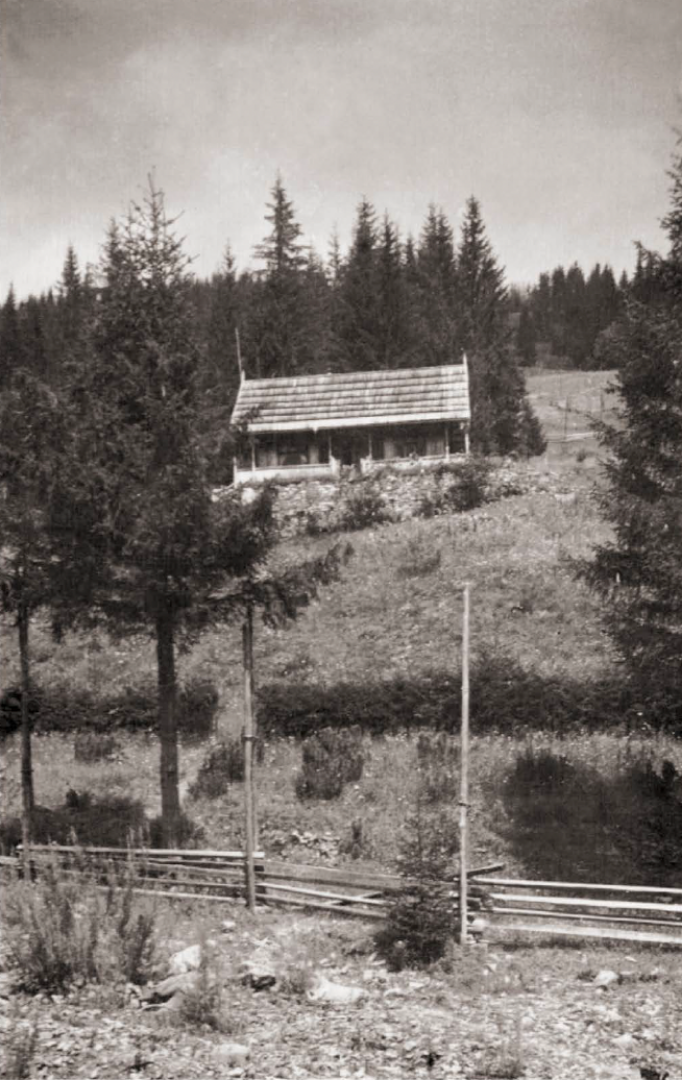
The house in Bystrzec, 1939
The Bystrzec valley began at an altitude of 700 m above sea level and continued for 8.5 kilometres west along the Kostrzyca ridge. The poor wagon road led to the church, where Hutsuls from the vast Żabi district came on the second Sunday of August for the parish fair. Further on, there was the most ordinary Hutsul track. In 1928, the Dzembronia commune was separated from the great Żabi district, and Bystrzec was its hamlet. Hutsul houses, about 80 of them, were located on sunny slopes. At the end of the valley stood the hut of Piotr Gotycz, erected at approx. 900 m above sea level. And even higher, where Petro Matarżuk lived, stood the house of Stanisław Vincenz – number 102, visible in the preserved photograph. Built from wood, stripped and shaved beams, similar to Hutsul huts, it was immersed in the scent of the best hay meadows in the Eastern Carpathians. Its walls “shone with a gentle glow”, its interior was filled with the murmur of three streams joining nearby, just behind its windows, ceremonial spruces, household trees, formed a dense wall. To live in such a house you had to feel like a free person.
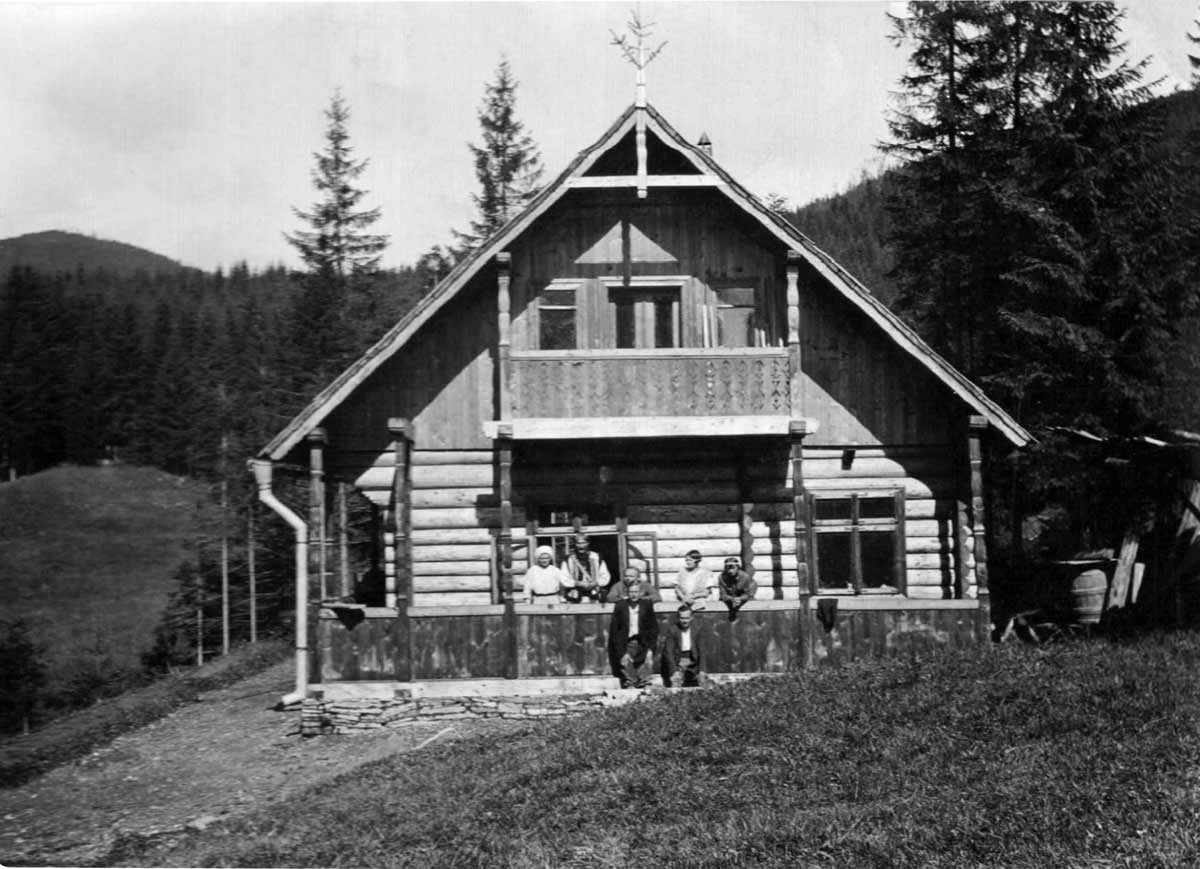
The house in Bystrzec, 1927
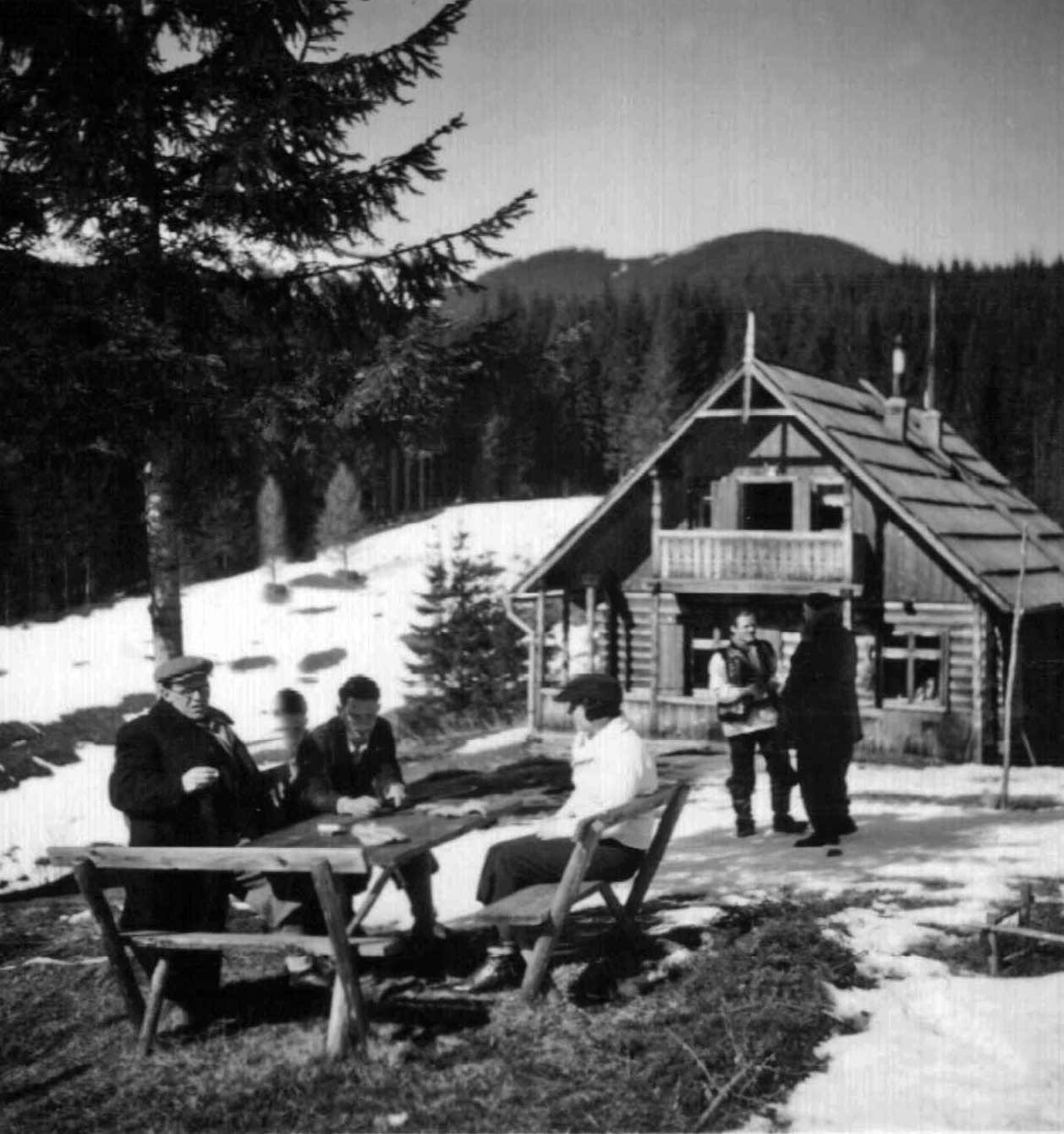
The house in Bystrzec, 1934
Bystrzec gave the sense of distance from the people of the road, holidaymakers, scouts, human crowd and bustle, from the civilization of money circulation, to which the Hutsuls of the valleys finally succumbed. It was a response to life’s turbulences and failures, it was at the same time a consequence of a philosophical attitude, it was a choice. The cottage in Bystrzec was a kind of home on the road, a wanderer’s home, freed from the burden of the farm, a bit like a shepherd’s hut in the mountain pastures inhabited seasonally and equipped with the necessary appliances. It was a house where you could take care of yourself in the sense that you were the master of time, action, thinking, seeing and dreaming. With time, Bystrzec slowly ceased to be a home, it became a place and a non-place, a drop and the sea, a speck and the whole, a heavenly body and the cosmos. The rarefied air, mist, a sharp slant of light from behind the clouds, banal atmospheric phenomena which the capricious mountain weather does not spare, slowly form a system of signs of the world script, they draw figures against the landscape, they tell stories. And one story most often: about immortality, cosmic love that animates the world, about the world’s nuptials.
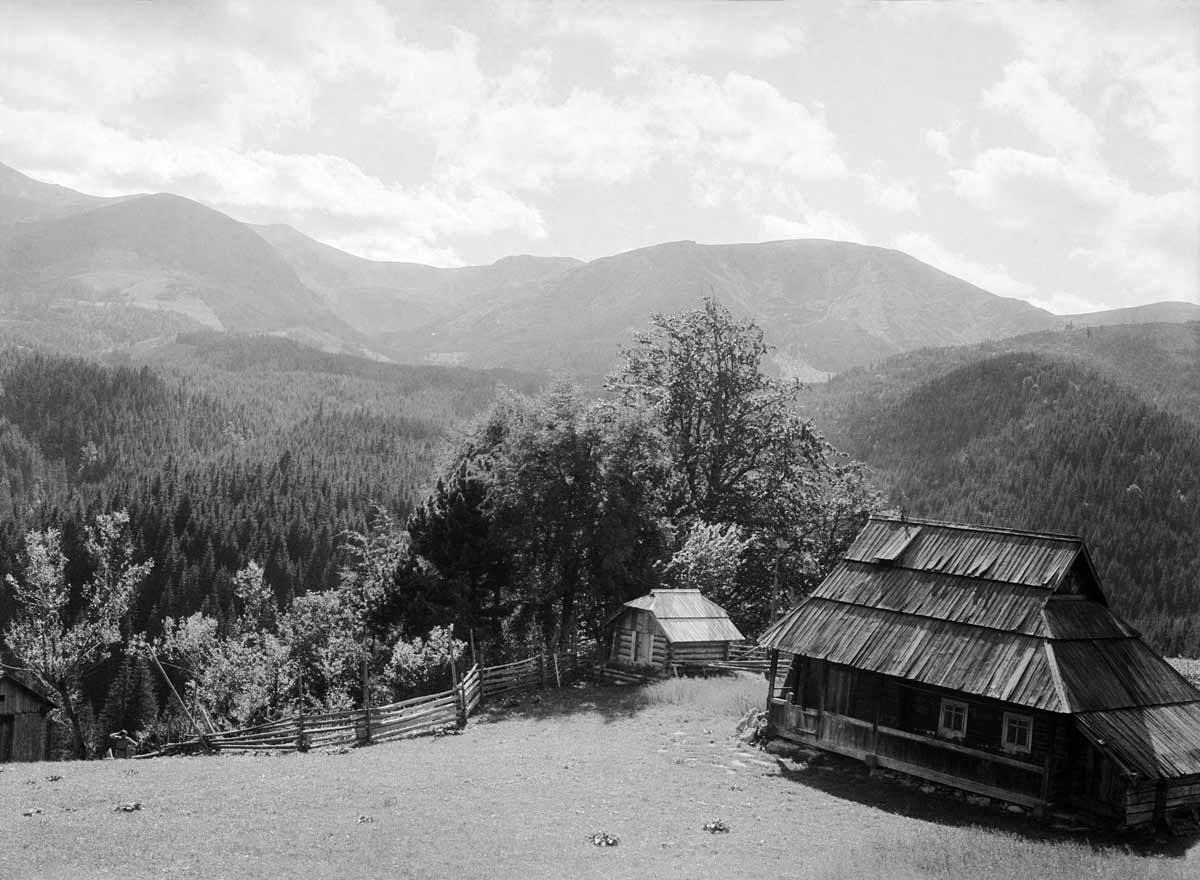
Bystrzec, 1933, photo by L. Cipriani
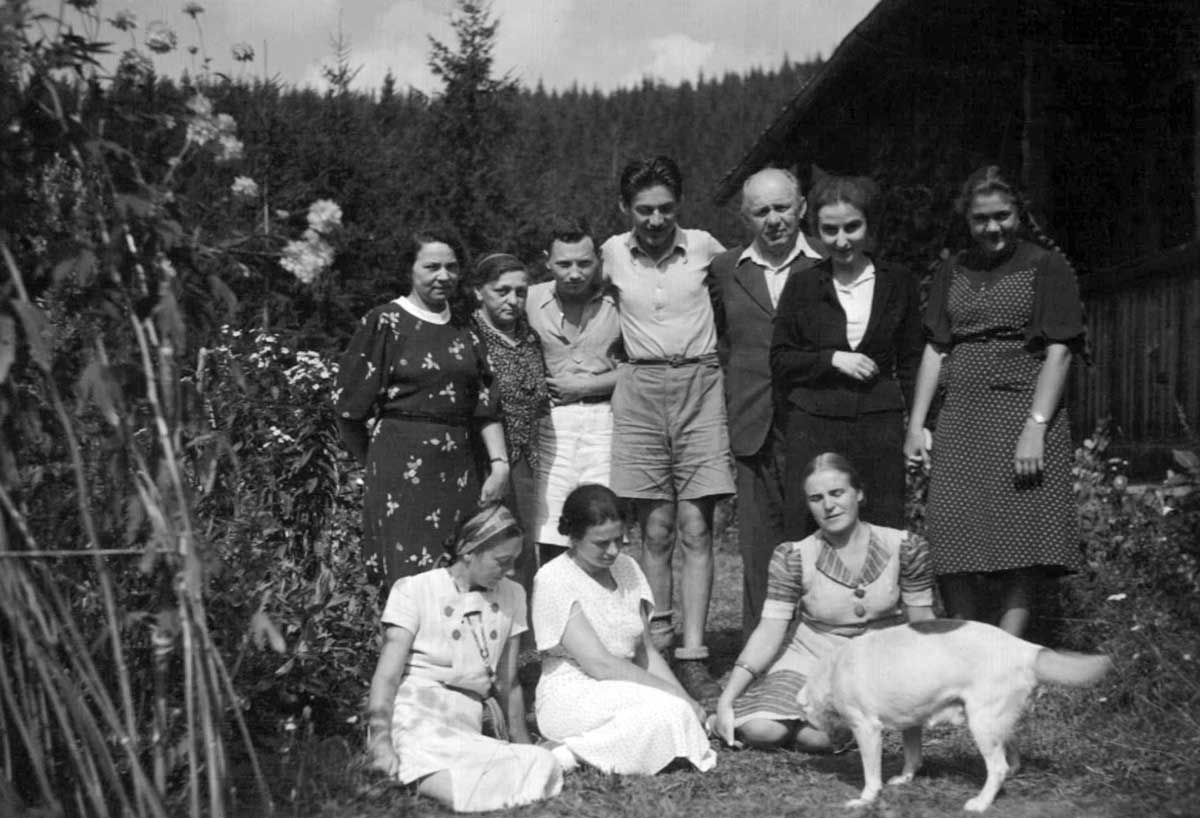
The Vincenzes with guests in front of the house in Bystrzec, 1933
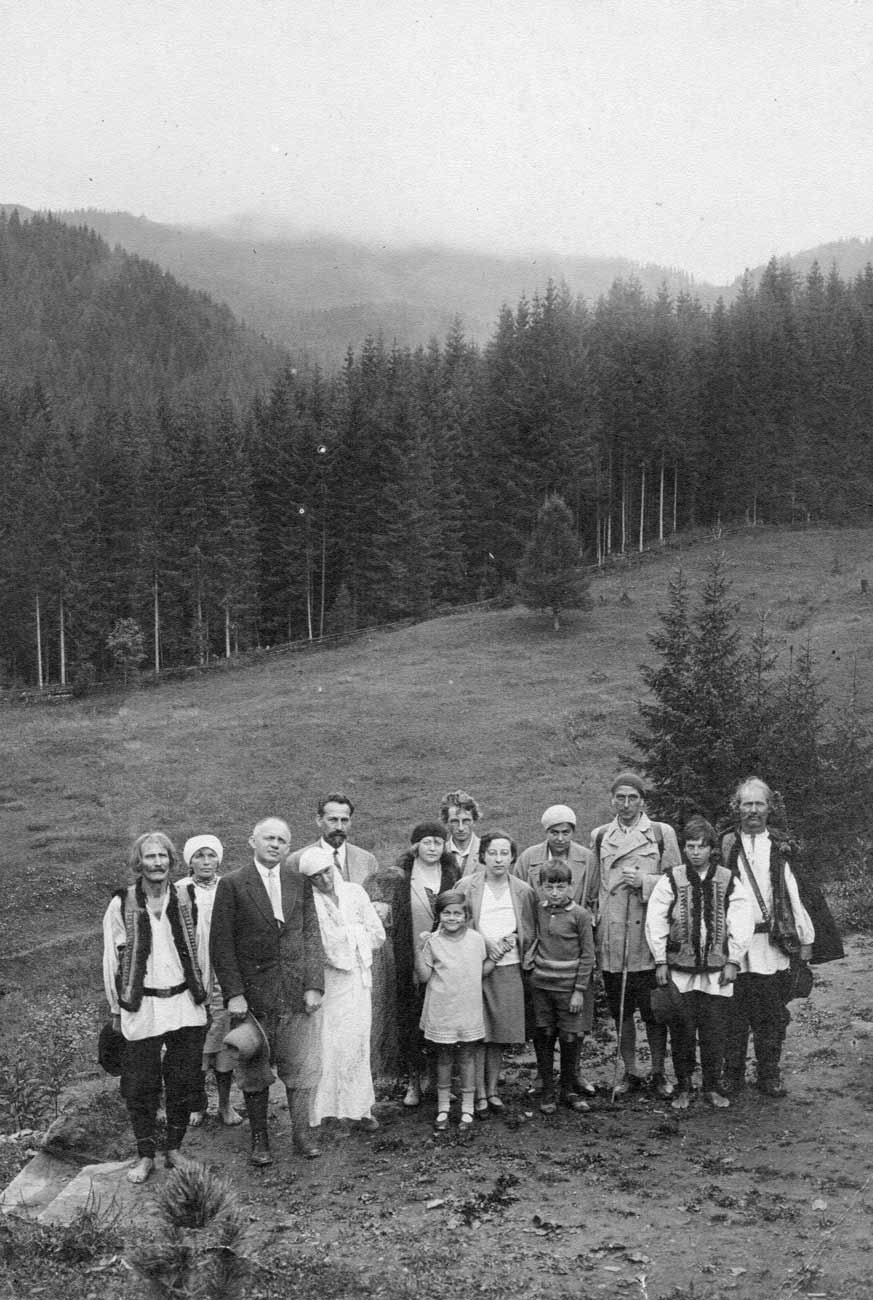
The last guests in Bystrzec, August 1939
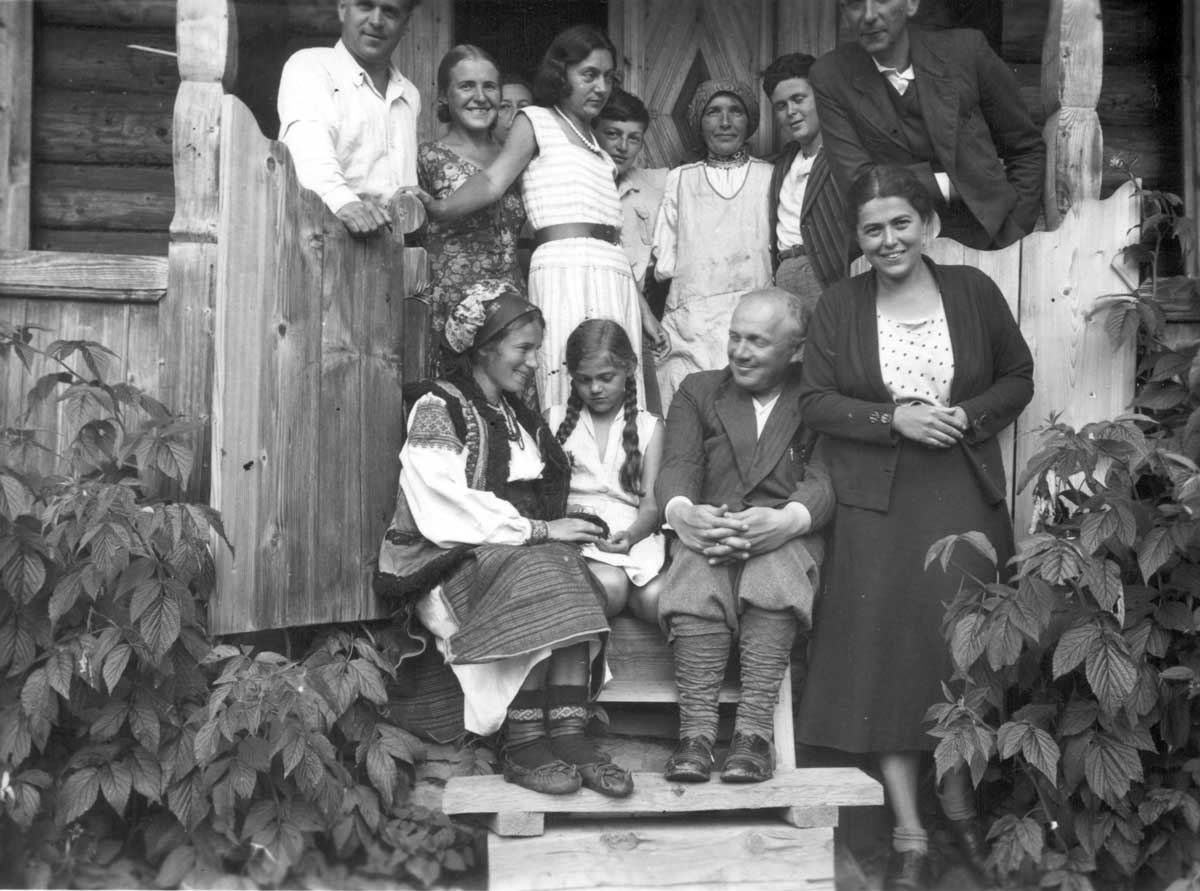
The Vincenzes with friends and neighbours in Bystrzec, 1934
Avails you, nor reclaiming call. Heaven calls,
With everlasting beauties. Yet your eye
Turns with fond doting still upon the earth.
Therefore He smites you who discerneth all
(transl. by H. F. Cary)
(Dante Alighieri, Purgatory, Canto 14)